
 flag history
Sep 19, 2026
9 min read
The history behind famous flags
Read story
Red, white, and blue appear on the flags of France, the United States, the United Kingdom, Russia, and many other countries. Discover why this color combination became one of the most recognizable patterns in the world.
By Flag Trivia
4 min read

Red, white, and blue are among the most common colors in national flags. They appear together on the flags of France, the United States, the United Kingdom, Russia, the Netherlands, Norway, Iceland, Australia, New Zealand, and many others. The pattern is familiar enough to feel universal—but there is no single meaning shared by every country that uses it.
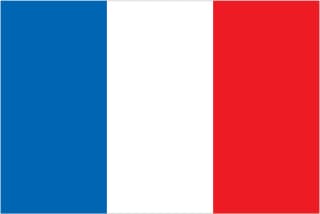
The better question is not “What do red, white, and blue always mean?” It is “Why were these colors useful and memorable to so many flag designers?” The answer combines older European heraldry, maritime history, revolutions, and the practical need for strong contrast.
A good flag has to work at a distance, in changing weather, and while moving in the wind. Red, white, and blue form a high-contrast palette: white separates darker colors, red catches attention, and blue remains visually distinct from both. The colors can be arranged in stripes, crosses, stars, or more complex symbols without disappearing into one another.
That practical advantage matters. National flags are flown on buildings, ships, uniforms, sports grounds, and tiny digital icons. A palette that remains recognizable in many sizes has a long life.
The Dutch flag is one of the oldest modern tricolors still in use. Its horizontal red, white, and blue bands developed from the flag associated with the Dutch revolt and the House of Orange. The early version used orange, white, and blue; red gradually replaced orange because it was easier to see and more stable as a dye.
That horizontal tricolor became an influential model. Other countries could adapt a simple three-band design while giving the colors their own political and cultural meaning.
France’s blue, white, and red vertical tricolor became associated with the French Revolution and the new idea of a nation represented by its citizens. Blue and red were linked with Paris, while white had long been associated with the French monarchy. Bringing the colors together made the flag a visual statement about a changing political order.
The French tricolor influenced later flag designs, especially during the nineteenth century when independence movements and national identities were spreading across Europe and beyond. A tricolor could be simple to produce, easy to recognize, and powerful enough to represent a new country.
The Union Jack combines the crosses of England, Scotland, and Ireland in red, white, and blue. Its design became familiar across trade routes and colonies, helping make the palette recognizable far beyond Europe.
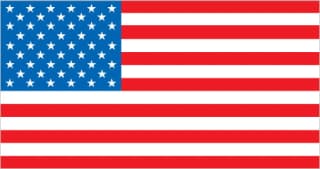
The United States flag uses the same three colors in a different visual language: thirteen stripes, a blue canton, and stars representing the states. The colors are commonly associated with courage, purity, and vigilance in American tradition, but those meanings belong to the United States’ own flag story. They should not automatically be applied to every red-white-blue flag.
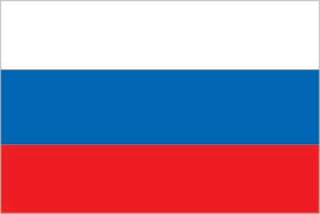
Russia’s horizontal white, blue, and red tricolor is another influential example. The arrangement is related to the Dutch model, and the colors later became connected with Russian history and Slavic identity. Several countries in Eastern Europe and the Balkans use similar colors, although their order, proportions, and symbols differ.
This is why color alone is not enough to identify a flag. The direction of the stripes, the position of a cross, and the presence of a coat of arms can be more useful clues than the palette itself.
Red may represent courage, sacrifice, revolution, or a historic dynasty. White may suggest peace, purity, faith, or a geographical feature such as snow. Blue may point to the sea, sky, liberty, loyalty, or a connection to a royal tradition. These are common interpretations, not universal rules.
The same color can tell a completely different story in another country. To understand a flag, look at its full design and history rather than relying on a color dictionary.
When several flags share the same palette, use a quick visual checklist:
Once you learn to combine color with layout, flag quizzes become much easier. Browse the complete flag legend to compare designs, then put your memory to work in the flag quiz.
Continue reading
More stories about the symbols, histories, and details behind the world's flags.

