
 flag history
Sep 19, 2026
9 min read
The history behind famous flags
Read story
Romania and Chad both fly a blue, yellow, and red vertical tricolor. Here is how two countries arrived at nearly the same design—and the tiny detail that separates them.
By Flag Trivia
3 min read

Place the flags of Romania and Chad side by side and the resemblance is immediate. Both are simple vertical tricolors: blue at the hoist, yellow in the middle, and red at the fly. Both use three equal bands and no central emblem. From a distance—or in a photograph with uneven lighting—they can look exactly the same.
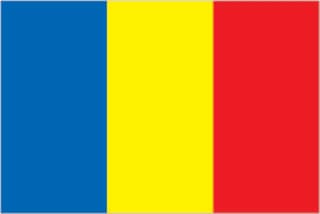
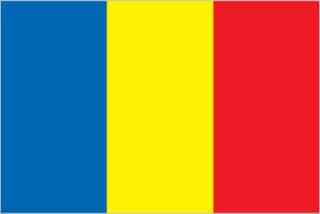
The important detail is the shade of blue. Chad's specification uses a darker, more indigo blue, while Romania's is generally lighter and closer to cobalt. The difference is real, but subtle enough to disappear on inexpensive fabric, faded flags, or a small screen.
Romania's blue, yellow, and red tricolor is tied to the nineteenth-century movement for national unity. The colors became especially important during the 1848 revolution, and the vertical tricolor was later established as Romania's national flag in the nineteenth century.
For much of the twentieth century, Romania's flag carried a coat of arms in the center. After the fall of the communist government in December 1989, demonstrators cut the emblem out of flags, and the plain tricolor returned as the national design. That change made Romania's flag look even more like Chad's.
Chad adopted its current flag in 1959, shortly before independence from France. Its designers combined the blue, white, and red tradition associated with France with the pan-African idea represented by green, yellow, and red. Blue replaced green, producing a vertical blue-yellow-red tricolor.
The colors also gave the new nation a clear, dignified symbol without relying on a complicated coat of arms. That simplicity is part of what made the flag practical—and part of why the result resembles Romania's.
No. The blue shade is the clearest technical difference, and official specifications treat the two colors as distinct. In everyday conditions, however, color standards are difficult to judge precisely. Sunlight, dye, age, and the material of a flag can make Chad's indigo and Romania's cobalt appear almost indistinguishable.
There is also a difference in the stories behind the colors. Romania's tricolor is associated with its national unification and modern political history. Chad's design reflects the country's transition from French colonial rule to independence and its place in Africa. Similar geometry does not mean shared national meaning.
Start at the flagpole and check the blue band. A noticeably darker blue points to Chad; a brighter blue usually points to Romania. If the flag is old, photographed from far away, or shown under colored lights, the safest answer may be to check the context rather than trust your eyes alone.
This is one of the best reminders in vexillology: a flag can be visually simple while carrying a complicated history. Test yourself with another round of Flag Trivia, or compare more designs in the flag legend.
Continue reading
More stories about the symbols, histories, and details behind the world's flags.

