
 flag history
Sep 19, 2026
9 min read
The history behind famous flags
Read story
Can you distinguish Australia from New Zealand or Indonesia from Monaco? Learn the visual clues that separate the country flags most often mistaken for one another.
By Flag Trivia
3 min read

Flag quizzes often become difficult when two designs share the same colors, layout, or historical influences. A quick glance may tell you that a flag is a red-and-white bicolor or a blue field with stars, but not which country it belongs to. The trick is to look for the smallest distinctive detail.
Here are five pairs that regularly challenge even confident geography fans.
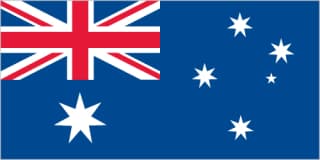
Both flags use a dark blue field, the Union Jack in the upper hoist corner, and stars representing the Southern Hemisphere. Australia has a large seven-pointed Commonwealth Star below the Union Jack and five white stars forming the Southern Cross. New Zealand has four red stars with white borders and no large Commonwealth Star.
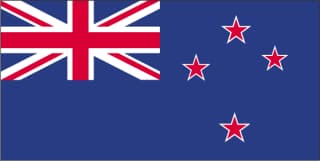
Fast clue: count the Southern Cross stars. White stars point to Australia; four red stars point to New Zealand.
Indonesia and Monaco both use a plain horizontal red-over-white bicolor. Their flags are nearly identical in everyday use, so the most reliable clue is proportion: Indonesia’s flag is longer and narrower, while Monaco’s is closer to a square.
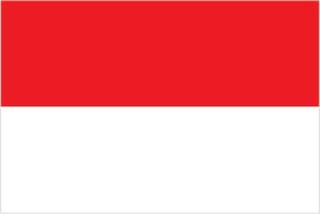
The two countries also arrived at the design through different histories. Indonesia’s colors are tied to older regional and national traditions, while Monaco’s red and white are associated with the Grimaldi dynasty.
Fast clue: if the image gives you enough space to judge the shape, a squarer flag suggests Monaco. If the ratio is unclear, use the location or context.
Both flags use vertical green, white, and orange bands. Ireland’s green band is at the hoist, while Côte d’Ivoire reverses the order so orange is at the hoist. The shades can vary in photographs, but the stripe order is the key.
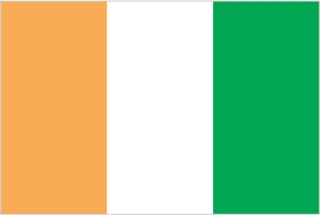
Fast clue: green next to the flagpole means Ireland; orange next to the flagpole means Côte d’Ivoire.
These two horizontal red, white, and blue tricolors are easy to confuse because they use the same order. Luxembourg’s flag is generally lighter, with a sky-blue band, and its proportions are longer and narrower. The Netherlands uses a deeper blue and a more compact flag shape.
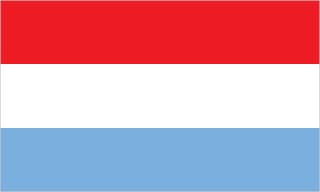
Fast clue: pale blue and a long, slim shape suggest Luxembourg; darker blue and a more compact shape suggest the Netherlands. As with any color comparison, faded fabric and screen settings can make this clue unreliable.
Romania and Chad both use a vertical blue-yellow-red tricolor with no emblem. The key difference is the blue: Chad’s is usually darker and more indigo, while Romania’s is generally lighter. It can be extremely difficult to judge when a flag is small or poorly lit.
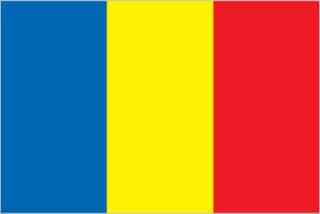
Fast clue: use the shade of blue only as a supporting clue, then check the context. Read our full story on why Romania and Chad have almost identical flags.
When two flags look alike, do not try to memorize the entire image at once. Work from the outside in:
The more comparisons you make, the faster these clues become. Use the flag legend to study every country in the collection, then test yourself with a round of Flag Trivia.
Continue reading
More stories about the symbols, histories, and details behind the world's flags.

