
 flag history
Sep 19, 2026
9 min read
The history behind famous flags
Read story
Denmark, Sweden, Norway, Finland, and Iceland all use a Nordic cross. Learn where the pattern came from and how to tell these related flags apart.
By Flag Trivia
3 min read

The flags of Denmark, Sweden, Norway, Finland, and Iceland look like members of the same visual family. Each uses a cross shifted toward the flagpole rather than centered in the middle. This is called the Nordic cross, and it is one of the clearest examples of neighboring countries sharing a design tradition while keeping their own identity.
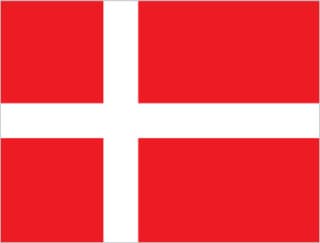
The pattern is especially useful in a flag quiz. Once you recognize the off-center cross, you can narrow the answer to the Nordic family before using color and proportion to identify the country.
Denmark’s red flag with a white cross is known as the Dannebrog. It is widely regarded as the oldest continuously used national flag, and the Danish design became an important model for other flags in the region. Its simple geometry is easy to recognize from a distance and easy to reproduce.
The white cross reaches to the edges of the field, while the vertical arm sits closer to the hoist. That placement is the feature that turns an ordinary cross into a Nordic cross.
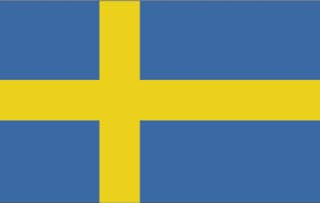
Sweden uses a blue field with a golden-yellow cross. The strong contrast makes it one of the easiest Nordic flags to spot. Finland reverses the mood with a white field and a blue cross, a combination often associated with the country’s snowy landscape and lakes.
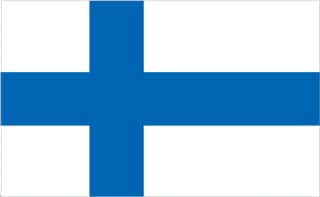
When these two flags appear together, focus on the background first: blue behind a yellow cross means Sweden, while white behind a blue cross means Finland.
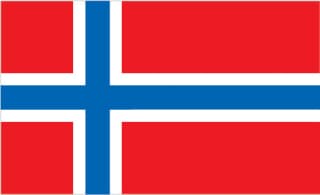
Norway’s flag adds a blue cross inside a white cross on a red field. Iceland uses the same layered pattern but swaps the colors around: a red cross sits inside a white cross on a blue field. Their shared structure makes the inner cross the key clue.
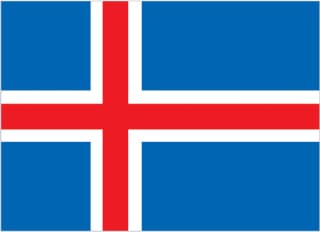
Fast clue: red outside with blue inside points to Norway; blue outside with red inside points to Iceland.
The Nordic cross developed from Christian cross symbolism and European heraldic traditions. Moving the vertical arm toward the hoist also reflects the way a flag is seen when it flies from a pole: the design remains balanced across the visible field while giving the flag a strong directional shape.
The pattern spread through political, cultural, and historical connections around the Nordic region. Similar structure does not mean the countries share one story, however. Each flag has its own colors, symbols, and national associations.
When you see a Nordic cross, use this order:
Study the full collection in the flag legend, then see how quickly you can recognize the family in the flag quiz.
Continue reading
More stories about the symbols, histories, and details behind the world's flags.

