
 flag history
Sep 19, 2026
9 min read
The history behind famous flags
Read story
Stars can represent states, islands, constellations, unity, or a country’s future. Explore the different stories behind some of the world’s most memorable starry flags.
By Flag Trivia
3 min read

A star is one of the most flexible symbols in vexillology. It can suggest light, guidance, independence, unity, or a place in the night sky. Some flags use one large star; others use dozens of small stars arranged in a constellation, a circle, or a map-like pattern.
The shape is simple enough to remain visible from far away, but its meaning can be specific enough to tell a national story. That combination makes stars especially popular on modern flags.
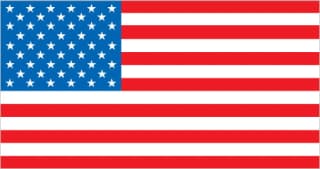
The United States flag has fifty white stars in its blue canton, one for each state. The thirteen stripes represent the original colonies. Unlike the stripes, the number of stars has changed as new states joined the union, so the flag records the country’s growth in a very direct way.
The stars are arranged in rows rather than as a literal picture of the sky. Their ordered pattern emphasizes the idea of a union: separate points gathered into one field.

Australia and New Zealand both show the Southern Cross, a constellation visible in the southern sky. Australia’s flag includes five stars for the constellation, along with a large Commonwealth Star beneath the Union Jack. New Zealand uses four red stars with white borders.

The Southern Cross is more than decoration. It is a geographic clue, connecting these flags with the southern hemisphere and the night sky familiar to people in the region.

Brazil’s blue globe contains twenty-seven stars, representing the country’s states and the Federal District. Their arrangement depicts the sky over Rio de Janeiro on the morning of November 15, 1889, the date Brazil became a republic. A band across the globe carries the national motto “Ordem e Progresso,” or “Order and Progress.”
This makes Brazil’s flag unusually detailed. The stars are not placed randomly: the design combines a political map of the federation with a specific astronomical view.

China’s red flag has one large yellow star and four smaller stars. The large star is commonly understood as representing the leadership of the Communist Party, while the smaller stars represent the people of China. Their arrangement suggests a relationship between the larger central symbol and the surrounding population.
The design is a reminder that similar symbols can carry very different political meanings. A star may represent a state on one flag and a political ideal on another.
Some flags use a single star as a symbol of unity, independence, or a guiding ideal. Others use several stars to count territories or show a connection to a region. The number matters, but so do the position, color, and relationship between the stars.
When you are identifying a starry flag, ask three questions:
These clues are often more reliable than trying to count every tiny point in a low-resolution image. Compare the designs in the flag legend, then test your memory with the flag quiz.
Continue reading
More stories about the symbols, histories, and details behind the world's flags.

